Aggressive Dog Training
Aggression can be frightening and confusing for dog owners. It is a not something to take lightly and their is real help that doesn’t involve dominating your dog.
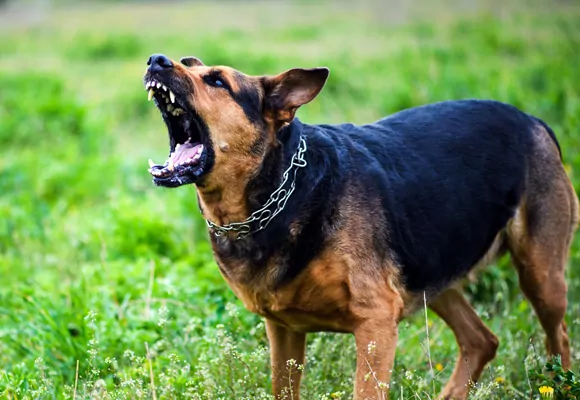
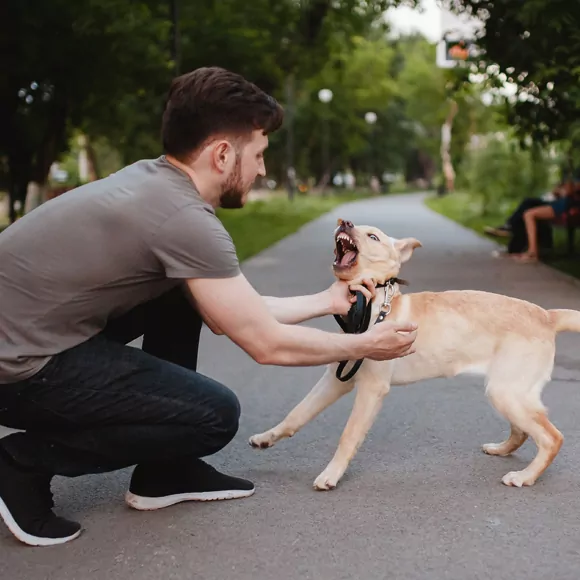
SIGNS OF AGGRESSION
Aggression is a symptom of your dogs emotions and feelings. The vast majority of aggression comes from fear or lack of trust.
This means corrections and punishment based tactics could make the problem worse.
Most of the time punishment only suppresses the behavior but doesn’t address the root
Cause, how your dog feels about what is around them. Change how they feel and the behavior will change. But how do you do that?
Types of aggression:
Fear Aggression,
Predatory Aggression,
Redirected Aggression.
Solutions for Aggressive Dogs
Remember, aggression is a functional behavior for dogs. Your dog is displaying behavior because you have either missed other signals, or because the behavior serves a purpose to your dog. Aggression is often a last ditch effort to increase distance between your dog and a person/dog or anything scary, decrease distance to acquire something, control something they want to keep, or chase and kill something like prey.
Steps:
To reduce your dogs aggression we must diagnose the motivation first.
Next we set up a treatment plan that makes your dog feel safer, helps them feel more in control, makes life more predictable, teaches alternate behaviors that accomplish the same goals.
Positive punishment from aversive tools like prong, choke and ecollars is not recommended.
Is this my first time meeting your dog?
Please start with an initial training consultation.
Choose in-person or virtual
INITIAL TRAINING
CONSULTATION
Each in-person (private) training program starts with an initial consultation that typically lasts about 90 minutes. This first meeting allows me to get to know your pets better, experience the relationship dynamics and assess the environment for immediate considerations that may prove useful to improve your dogs’ behavior.
- 90 Minutes
VIRTUAL ONLINE
CONSULTATION
Like our in person consultation, this first meeting allows me to get to know your pets better, experience the relationship dynamics and assess the environment for immediate considerations that may prove useful to improve your pets’ behavior. This initial in person consultation is a little more talk than action.
- 75 Minutes
Reasons To Fall In Love With Us,


100+ Verified Reviews And Testimonials From Happy Dog Owners Across Orange County.
Recommended by local
veterinarians, pet stores, and other esteemed animal behavior colleagues. We have several Yelp and Google reviews to help you make a good decision in who you trust with your best friend.

None Of Our Programs Involve Shock, Choke Or Prong Collars.
You are not responsible for dominating your dog and you don’t have to learn to be “Alpha”. Training will not be painful or scary. We use reward based methods as these help increase good behavior and strengthen your relationship.

We Are Continually Learning And Adapting.
I regularly attend education lectures, seminars and events annually with some of the biggest names in the world of training and behavior to stay up to speed on the latest in positive, science based strategies and protocols.

We Offer A Wide Variety Of Training Options.
We offer a wide variety of training options for our clients including basic and advanced puppy classes, new rescue training and orientation, reactivity and
aggression training, off leash
preparedness training, training for the very sensitive and shy, as well as trick classes for those just wanting to have fun with their dogs.


Or for on-going training
VIRTUAL ONLINE
COACHING
Are you keeping your distance socially or outside my service area? Online virtual training is a great tool for a wide range of behavior issues and training goals. The main difference is that these visits are conducted over video through Zoom, Skype or Facetime via your home computer and cell phone.
- Online Consultation
PRIVATE 1-ON-1
COACHING
Our in person coaching programs are a fantastic choice for many pet owners who might need a more intimate approach, allowing me to show you professional training and behavior modification techniques in person. You will learn how to improve your technique and timing with me present.
- 1 hour In Person Training
DAY
TRAINING
Are you short on time or have a busy schedule? Do you want a faster paced program similar to a boot camp while allowing your dog to still live in the comfort of their own home? This is ideal as many off-site “bootcamps” have several different trainers working in a stressful environment with methods I often generally do not recommend.
- Package Of 6 Day Trainings
Frequently Asked Questions
There is still no evidence that spaying or neutering your dog will reduce aggressive behavior as there are many causes for aggression that aren’t hormonal. In some cases it may be helpful and in some cases it can increase fearful and aggressive behavior. Most of the behavior issues tied to spaying or neutering have to do with the procedure being done early before or during adolescence.
Corrections imply a sense of punishment which I don’t advise for aggressive behavior.
Aggression can encourage more aggression. The most effective long term approach to managing and reducing aggressive behavior in dogs is through reward based training interventions that look at the whole picture. This means looking into environmental management, enrichment, vet checks for pain, relationship building and predictability.
Undiagnosed or silent pains are commonly involved in aggression cases. As many as 50% of dogs who show aggression may be hiding some pain or discomfort such as GI upset, skin conditions, arthritis, tooth issues, ear infections, nerve pain and more. A full health check, sometimes with diagnostic scans like X-rays or blood tests are important.
In many cases you may see an improvement in as little as one visit. Gradually when conditions change and new behaviors are installed, your dog will learn their aggression isn’t needed any more4. Aggression is a symptom of a need that your dog doesn’t know how to achieve any other way. Aggression is a functional behavior and we can teach them new ways to avoid having to engage in it.
Most aggressive behavior has little to do with the breed unless we aren’t meeting our dogs needs per their breed and genetics. When your dog’s needs aren’t met they may exhibit anxiety and aggression to cope the best they can. Some breeds may be harder to manage in a home environment which can also contribute to problematic behaviors.
Behavioral medication can be used through the partnership with your veterinarian or vet behaviorist along with training. It isn’t recommended as a solution by itself. Often this is helpful for dogs who are unmanageable in their current environment. Medication can reduce arousal, curb adrenal responses, increase positive neurotransmitters, increase plasticity in the brain and make learning easier for stressed dogs. Medication does not have to be permanent either.
During play you will see loose body language, exaggerated behaviors that look like aggression but are too over the top to really be interpreted that way by the dogs. Play is essentially rehearsed aggression sequences but with rules and breaks. Like kids playing cowboys and indians. There should be taking turns, evenness and consideration for feelings if one dog is trying to get away or seems fearful. Aggression involves hard eyes, baring of teeth, stiff or lined up body language, lunging, snapping, high rigid tails, tense facial expressions and staring often with frontal lip licks before an attack.
In many jurisdictions aggressive dogs get few chances if they have caused serious harm to another person or animal. You may be asked to leave your home if you rent or lose your homeowners insurance if you own. The average cost of a dog bite claim was $50,000 in 2021. If your dog is labeled viscous or potentially dangerous by your city, it can make owning and caring for your dog more challenging.
For other questions, call us at
(949) 836-6708