
The Most Common Mistakes Dog Owners Make: Explained
- | Blog

As a Certified Dog Behavior Consultant (CDBC), I work with dogs struggling with behavior issues such as aggression, reactivity, anxiety, fear, and impulse control. While every dog is an individual, the patterns behind these problems are remarkably consistent.
Most serious dog behavior issues are preventable. The dogs I see are mostly doing the best they can and behaving based on the current conditions they live in. These are not bad dogs. Instead, they come from common dog training mistakes that are often well-intentioned but based on outdated or misleading information. Sometimes people are careless or negligent but most often they just don’t know any better.
Below are some of the most common mistakes dog owners make, why they matter, and how addressing them early can prevent long-term behavior problems.
How many can you identify with?
GETTING A SECOND DOG TO ENTERTAIN THE FIRST DOG
One of the most common mistakes dog owners make is getting a second dog to entertain the first. Adding another dog does not fix boredom, training gaps, or behavior issues. In most cases, it makes things twice as hard. This is especially true when the first dog is still an adolescent and the second dog is a puppy. It is like asking your teenage kid to raise your 7 year old while you are at work. Good luck!
Instead of solving problems, owners often end up with more arousal, more management challenges, and less individual training time. While same-species social connections are needed, dogs do not need another dog to be fulfilled. They need structure, enrichment, and clear guidance from humans.
RAISING PUPPY LITTERMATES WITHOUT A SEPARATION PLAN
Getting puppy littermates may seem appealing, but without intentional separation from day one, it often leads to serious behavior issues. Littermates are already more bonded to each other than they will be to you.
Without early separation, these dogs often develop separation distress, poor independence, difficulty focusing on humans, and conflict as they mature. Littermates should ideally be trained, fed, walked, crated, and taken to the vet separately from the very beginning.
Most owners underestimate how much work this requires, which is why littermate issues are so common. Don’t roll the dice and hope it all works out, and don’t let your breeder guilt you into taking the last two. Do what is best for you and your family. Commit to only what you can handle.
TAKING PUPPIES HOME BEFORE EIGHT WEEKS OF AGE
Taking a puppy home before eight weeks can have long-term behavioral consequences. Puppies separated too early are more likely to struggle with fear, poor bite inhibition, arousal issues, boundary problems, and separation-related behaviors. In many cases, these dogs will require constant consideration for behavior issues for life.
Those extra weeks with the litter are critical. Puppies learn frustration tolerance, communication, and social regulation during that time. Early separation is one of the most preventable dog training mistakes and often shows up later as aggression or impulse control problems.
No matter how cute they are, do not adopt puppies under eight weeks. No responsible breeder would offer you these puppies. In fact, most of the time these dogs come from Craigslist or somebody’s backyard who needs to get rid of them because they were irresponsible in the first place.
CHOOSING A BREED THAT DOES NOT MATCH YOUR LIFESTYLE
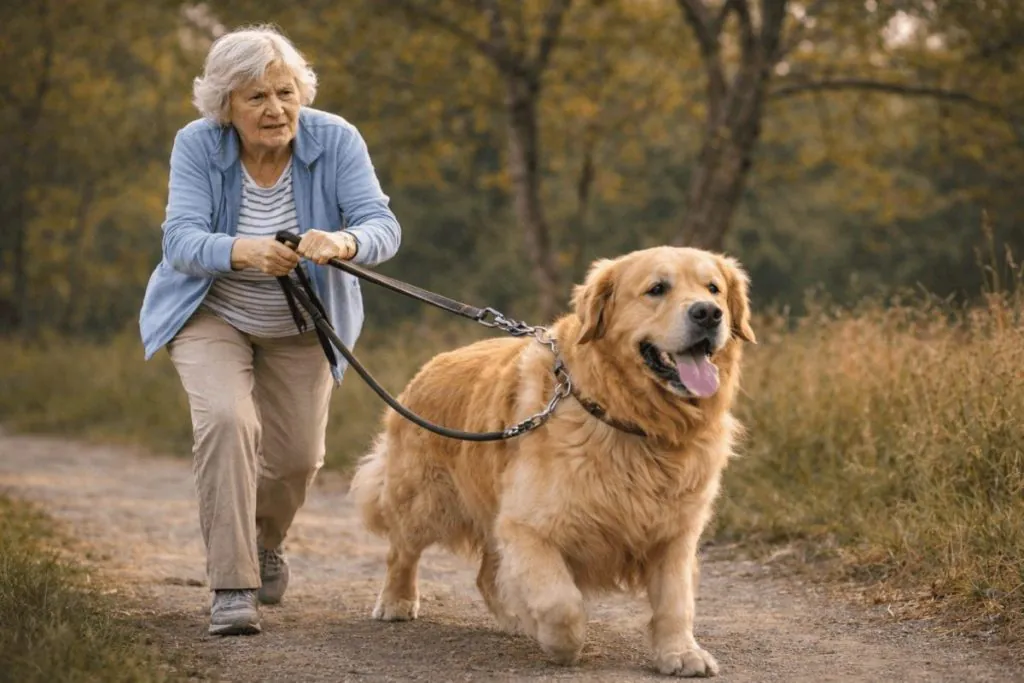
Breed traits matter. Ignoring them is one of the biggest contributors to preventable dog behavior issues. High-energy, large, or working breeds placed into low-activity or physically limited households often develop behavior problems due to unmet needs.
For many people, especially seniors, dog size also matters. A practical guideline is that your dog should ideally weigh no more than about one-third of your body weight. This helps with physical control, injury prevention, mobility challenges, and emergency handling. Choosing a dog that fits your real lifestyle prevents many issues before training even begins.
It is more common for people to choose corrective and punishnent based training because they selected a dog that is too strong or energetic for them.
NOT USING ADEQUATE MANAGEMENT EARLY ON
Many dog owners wait too long to use management tools such as gates, pens, crates, tethers, and long leashes. Instead, dogs are given too much freedom too early and quickly learn how rewarding it is to ignore humans and rehearse unwanted behaviors.
Management is not a failure. It is prevention. Good management stops dogs from practicing behaviors you do not want while you teach the behaviors you do want.
- Proper management also includes having enough options for your dog to choose from that aren’t off-limits. For puppies, this is 5 to 10 toys around them at all times that they can choose to interact with. I find that when I work in homes that are too immaculate, puppies end up getting in trouble because they chew and destroy their owners’ valuable stuff like shoes, pillows, remotes, and furniture.
FEEDING MULTIPLE DOGS WITHOUT STRUCTURE
Feeding two dogs without management and hoping it works out is risky. Food is one of the most common triggers for conflict in multi-dog households. Even dogs that appear friendly can develop tension over time. Don’t make this common dog training mistake.
Without structured feeding and physical separation, this can lead to resource guarding, fights, and chronic stress between dogs. Preventing these issues is far easier than fixing them later.
Feeding one dog in a crate or another in a kitchen behind a gate can prevent aggression over food. Make sure to put space or boundaries between your dogs when they have high-value treats too. Supervision is a normal part of dog ownership.
TRYING TO TRAIN MORE THAN ONE DOG AT THE SAME TIME
Training more than one dog at a time is extremely difficult, even for professionals. Walking two dogs who are not leash-trained or training a puppy alongside an older dog often leads to frustration and slow progress. Don’t set you and your dog up to fail. Practice teaching your new dog what they need to know before integrating them into a group walk.
Dogs learn best with individual attention. Training dogs separately first leads to faster learning, better focus, and fewer setbacks.
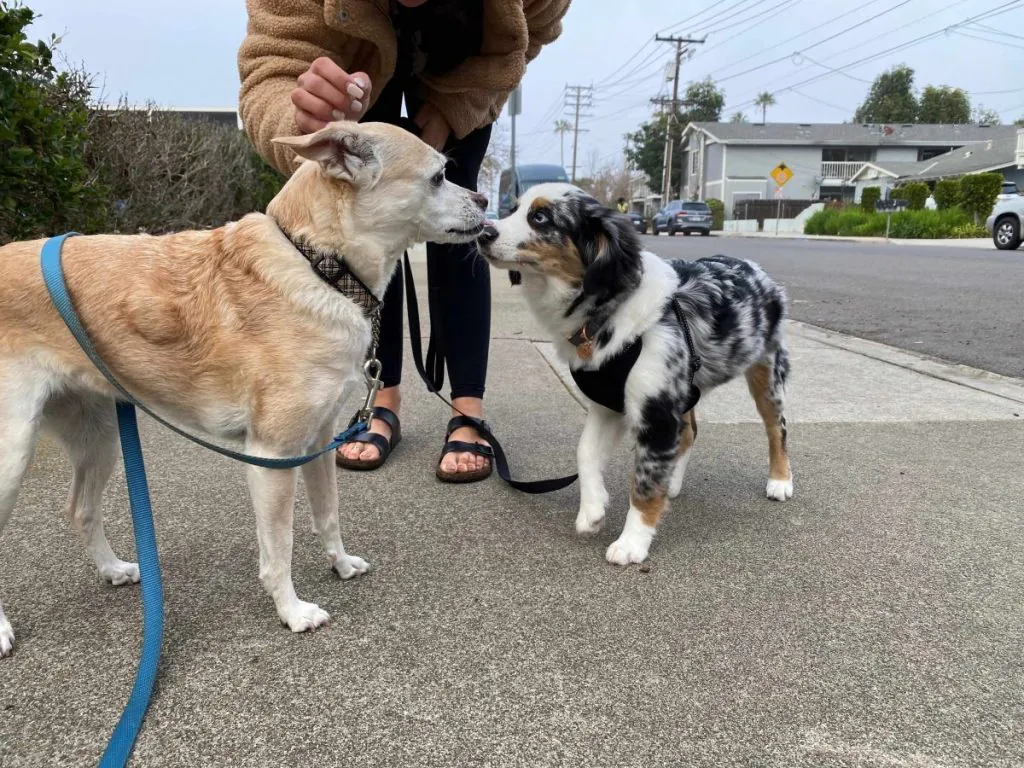
KEEPING DOGS ON SHORT, TIGHT LEASHES DURING GREETINGS
Short, tight leashes create physical and emotional tension. When dogs cannot move freely or create space, frustration and fear increase. This often contributes to leash reactivity and aggression. This is one of the most common dog training mistakes I witness.
Allowing more distance and keeping the leash loose gives dogs the ability to communicate and disengage when they feel overwhelmed.
CHOOSING TRAINING BASED ON PRICE OR REVIEWS ALONE
Good dog training can be expensive but cheap dog training almost always costs more. One of the most damaging dog training mistakes is choosing a trainer based only on cost, online reviews, or popularity.
It is always disheartening to hear I am the 3rd, 4th or 5th dog trainer attempting to help a dog’s behavior struggles. That means a lot of wasted time, money, and emotions.
Unqualified trainers often misrepresent themselves as qualified behavior specialists. They use harsh tactics that can worsen aggression, reduce trust, and lead to repeated training failures. Even if they aren’t forceful, they can be completely ineffective in their training because they don’t understand the dynamics of the dog’s behavior. For behavior issues, working with a certified or credentialed professional is critical. Look for someone with a certification like CDBC or CBCC-KA for behavior issues and at least a CPDT-KA or KSA for any other work.
If your dog does not have a certification, ask them why not. I didn’t achieve my current credential until about 10 years in. I regret not doing it earlier. With an advanced certification in dog behavior, my clients trust me more, and my professional colleagues refer more business my way. They are clear about the competencies and the ethics I stand for, and understand I maintain my education just to remain credentialed.
CORRECTING DOGS FOR NOT UNDERSTANDING
This is one of the most damaging mistakes dog owners make. Most obedience issues are not defiance. They are misunderstandings or motivation problems just like most of your other human relationship issues. Correcting a dog who does not understand a request reduces trust and increases stress.
Before adding pressure, it is essential to ensure the dog truly understands the cue, the environment is appropriate, and the reinforcement is meaningful for the individual at the time.
- No dog breed inherently needs to be corrected more than another. If someone suggests you need to be tougher or “Alpha’, you should ignore that advice and go back to better management and reward-based methods. People who choose to punish their dogs for disobedience tend to experience the most dog-to-human aggression.
OVERSOCIALIZING DOGS ON WALKS
Allowing dogs to meet everyone and every dog on walks creates unrealistic expectations. Dogs that expect constant interaction often develop frustration, pulling, and reactivity when access is denied. This is already tough enough for breeds like a Golden retriever, King Charles Cavaliers, and other social breeds like doodles.
You should find outlets for your dog to be social, but you should teach it on a case-by-case basis. Teach your dog to say hello only when you feel it is a teachable moment. That means the other owner only has one dog, the leashes aren’t tight, no one is on a cell phone, and both dogs are willing. It isn’t very common to meet all these criteria, so most of the time I suggest you just pass by other dogs and reward your dog for their effort and attention on you.
POISONING YOUR DOG’S RECALL
Calling a dog and then doing something unpleasant, such as locking them inside, grooming them, or reprimanding them, teaches them not to come. Repeated experiences like this damage recall reliability. This is what we call poisoning a cue.
Likewise, showing a visible reward before calling can teach dogs to ignore you unless they see payment first. A reliable recall is built through trust and consistent positive outcomes after the behavior.
- Solution: teach a fun game like hand targeting. This game teaches your dog to run to your hand on cue to get a reward. For issues around calling your dog inside, practice calling them in, giving some food or play, and then letting them go back to outside. This will teach them that they can’t predict when you will actually close the door behind them.
EXPECTING YOUNG CHILDREN AND DOGS TO MANAGE EACH OTHER
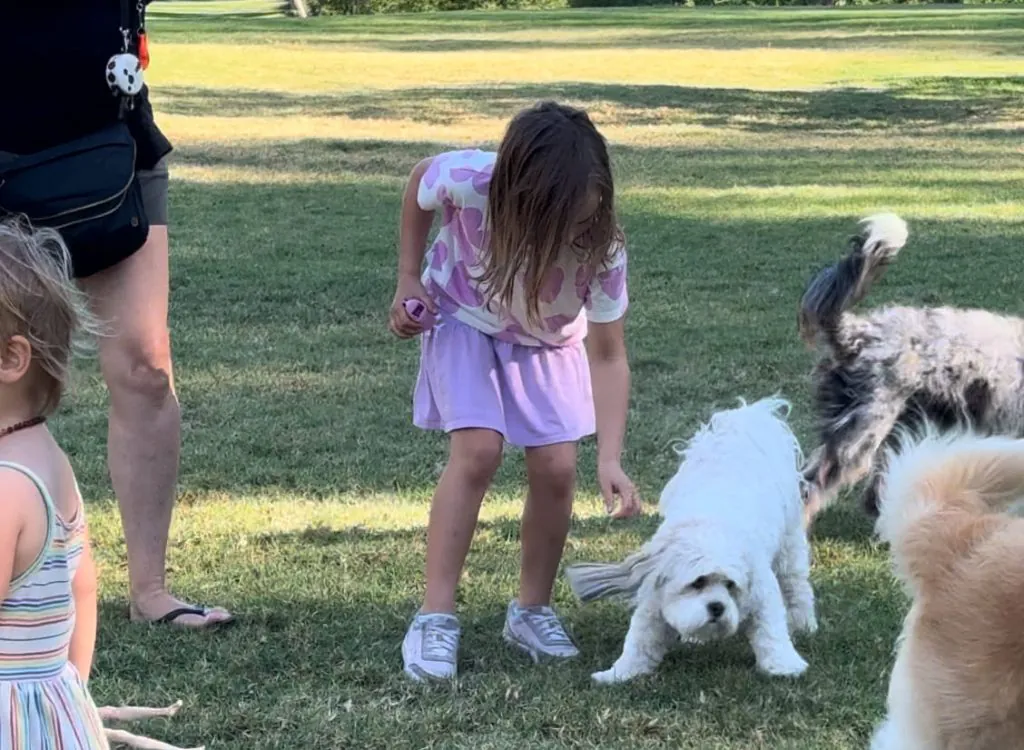
Young children and dogs should never be expected to manage interactions on their own. Children under seven often run, scream, chase, grab, and invade a dog’s space. They are too young to understand dog body language, which increases the chance of conflict.
No dog or puppy should be expected to handle the chaos of young children without proper help.
Without proper management, dogs may growl, lunge, or bite in self-defense. Managing children is just as important as managing dogs when it comes to preventing aggression. Be clear to your kids about your expectations with new puppies or dogs. They are not toys.
- It makes me cringe when I hear, “We got this puppy for my son or daughter”. I can’t say I have ever seen that work out too well.
FINAL THOUGHTS FROM A CERTIFIED DOG BEHAVIOR CONSULTANT
Most dog behavior issues do not appear overnight. They develop through repetition, stress, and misunderstanding. They start with unrealistic expectations and poor management. Avoiding these common mistakes most dog owners make can prevent many cases of jumping, pulling, and barking as well as aggression, reactivity, and anxiety before they take hold.
Early guidance matters. Prevention is always easier than repair.

With over a decade of experience in dog training and behavior modification, I’m dedicated to helping families create stronger bonds with their pets. I specialize in resolving challenging behavioral issues and guiding new puppy owners with confidence. At OC Canine Coaching, I blend science-based techniques with compassionate training to deliver lasting results. My work focuses on helping dog owners in Orange County raise calm, well-mannered companions through tailored coaching and ongoing support.